

























Do you have questions?
Call or text today, we are here to help!
602-422-9870

Arizona's wild humidity swings wreck coastal-style shutters. See why slat material choice matters more here than anywhere else in the country.
Every July, something strange happens to Arizona homes. A house that sat at 8 percent humidity for six straight months suddenly gets slammed with a monsoon storm that pushes the air to 70 or 80 percent humidity in a single afternoon. Then, just as fast, it dries back out again. This is not a coastal humidity problem. This is a swing problem, and it changes everything about what kind of window treatment actually holds up in an Arizona bathroom.
Most shutter buying guides were written with San Diego or Tampa in mind, places where humidity stays fairly steady year round. Arizona does not work that way, and the bathroom, already the most humidity-stressed room in the house, becomes ground zero for the problem. This piece looks at why the swing itself, not just moisture in general, is the real threat, and what that means for choosing a slat material that actually lasts.
For a closer look at how this plays out specifically in bathrooms, our earlier breakdown on monsoon-proof bathroom shutters for Arizona homes covers the installation side in more detail. Here, the focus is on the material science behind why Arizona demands something different altogether.
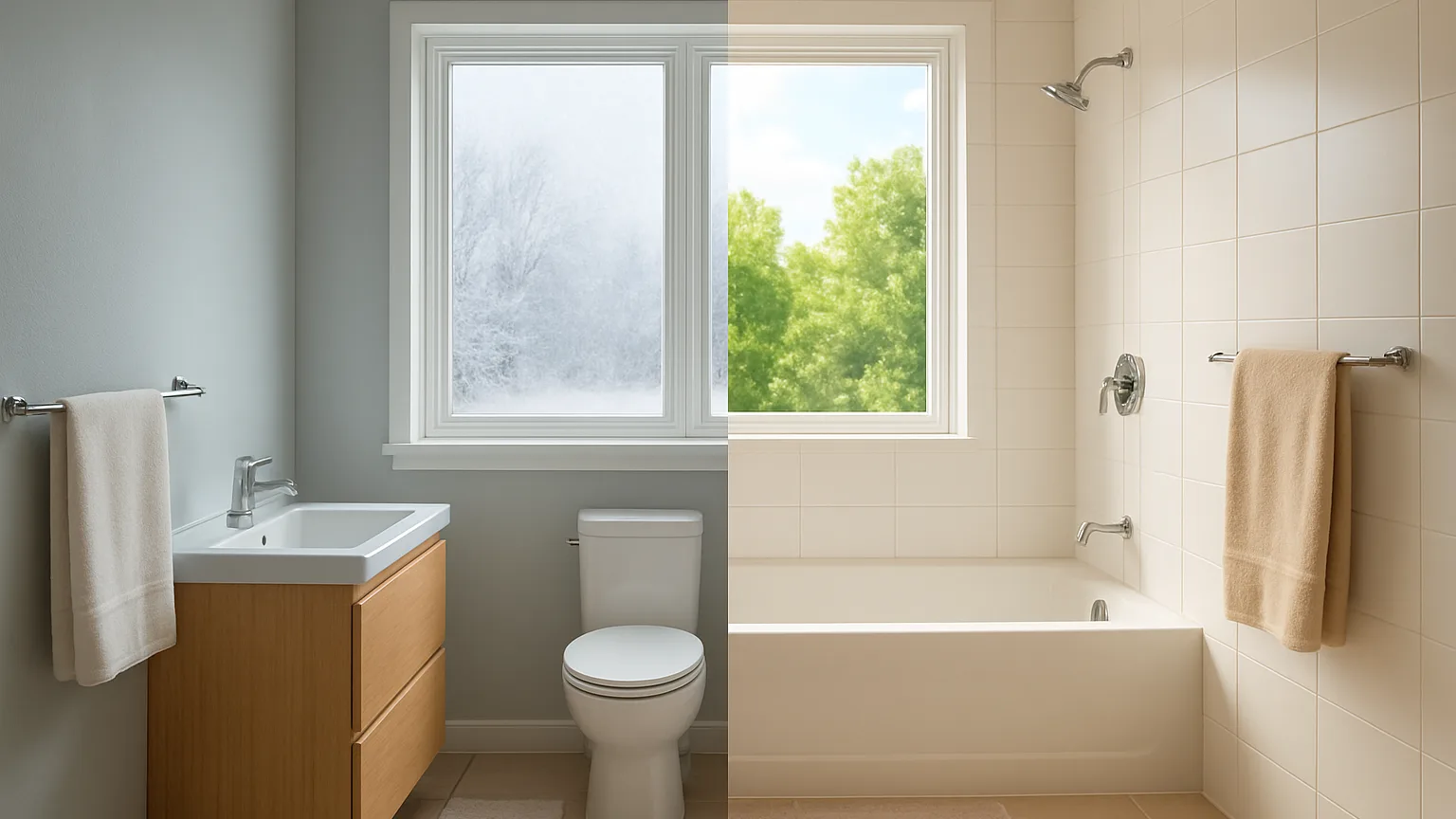
A shutter installed in a coastal bathroom deals with consistent moisture. The wood, or whatever material is used, adjusts once to that environment and mostly stays put. It might be humid, but it is predictably humid. Arizona bathrooms do not get that luxury. A shutter here might sit in bone-dry air for weeks, then get hit with a hot shower plus an actual monsoon storm rolling through outside, then dry out again by morning. That constant flexing, wood swelling and shrinking over and over, is what causes warping, cracked paint, and loose louver pins long before actual water damage would ever show up.
Wood is a natural material, and natural materials move with moisture content. A single humid season will not destroy a wood shutter. But Arizona does not give wood a single season. It gives wood dozens of rapid transitions between extremely dry and briefly saturated conditions every summer, sometimes within the same 24 hours. Each cycle is small, but they add up, and the joints where louvers meet the frame are usually the first place that stress shows.
Homeowners who also track indoor air conditions for other reasons, like the families following along with the Filter Detective Club's summer HVAC mission, often notice this pattern before it becomes visible. Indoor humidity spikes during monsoon season are not subtle if you are paying attention to your home's air quality, and shutters are one of the first things to react.
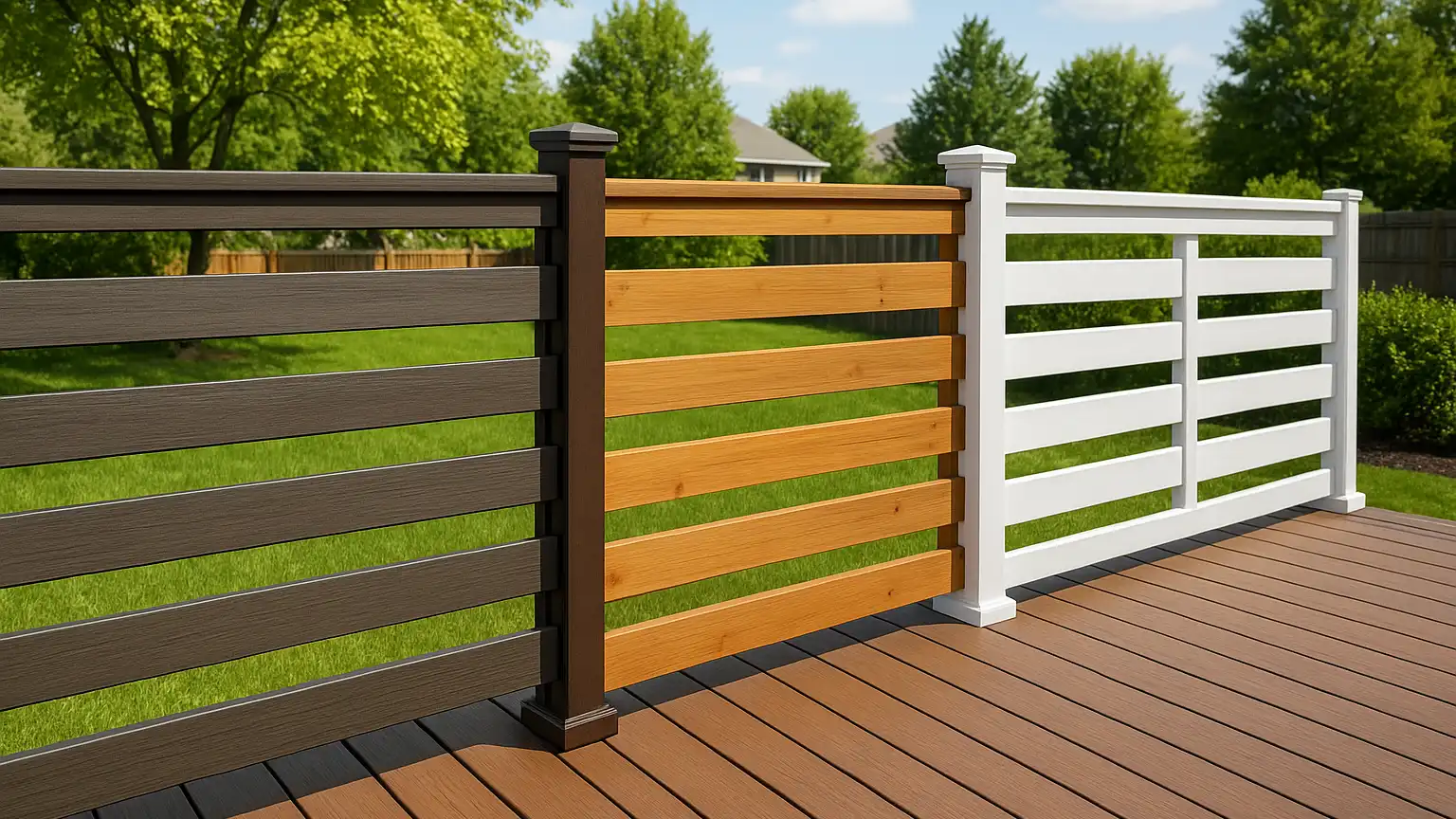
If wood struggles with repeated swings, the obvious next question is what does not. This is where synthetic and engineered materials earn their reputation, though not all of them perform the same way under Arizona's specific pattern of dry-then-wet-then-dry-again conditions.
“Coastal humidity is a constant, so coastal shutter advice focuses on mold resistance and finish quality,” says Marcus Delaney, lead product specialist at Direct Buy Blinds. “Arizona is a different problem entirely. You need a slat that shrugs off the swing itself, not just the wetness. That is really the whole reason waterproof poly shutters were developed the way they were, with a closed-cell structure that does not absorb moisture in the first place, so there is nothing to swell or shrink.”
That distinction matters more than most buyers realize. A material can be technically waterproof and still perform poorly in Arizona if it reacts to heat and dryness the way it reacts to moisture. The ideal bathroom shutter material here needs to be dimensionally stable across the entire range, not just resistant to water on one end of the scale.
Not every bathroom in an Arizona home faces the same exposure. A powder room with no shower and decent ventilation is a very different situation than a primary bathroom with a soaking tub and a west-facing window that catches the worst of the afternoon monsoon storms. Matching the slat material to the actual conditions in each specific room avoids overspending in low-risk areas while making sure the high-risk ones get the protection they need.
Homeowners investing in these upgrades often think about them the same way they think about other home improvements tied to long-term value, similar to how solar decisions get evaluated for their effect on resale, a topic covered well in our piece on solar panels and Arizona resale value. Shutters may seem like a smaller decision, but a bathroom with warped, discolored louvers is a visible flaw to any buyer walking through during a home sale, while a bathroom with crisp, stable shutters reads as well maintained without anyone having to say a word about it.
The smartest approach treats each bathroom as its own microclimate rather than applying one blanket solution across the whole house. A guest bathroom that barely gets used might be fine with a mid-range composite. A primary bathroom that sees daily steam and sits near an exterior wall exposed to storm winds deserves the more stable, purpose-built material even if it costs more upfront. This same room-by-room logic is exactly what HOAs run into at scale when they try to keep every unit looking consistent, which is why One Shutter Standard, Every Unit: An HOA Cost Guide is worth a look if you are weighing these decisions across more than one property.
Arizona's monsoon season does not just bring rain, it brings a kind of stress that most window treatment materials were never designed to handle, because most of them were designed somewhere else. Coastal humidity is steady and predictable, while Arizona's humidity arrives in violent, short bursts sandwiched between long dry spells, and that repeated swing is what actually breaks down wood, paint, and joints over time. Bathrooms feel this the hardest, since they combine daily steam with whatever the sky is doing outside.
Choosing a slat material built for stability across the full range, not just resistance to one type of condition, is the difference between shutters that look sharp for a decade and ones that start warping by the second summer. Once you understand that the swing itself is the real adversary, the decision gets a lot simpler, and it becomes obvious why what works beautifully on a coastline can fail quietly and steadily in a desert bathroom.
Call or text today, we are here to help!
602-422-9870